How commercial-scale deployment is changing the energy landscape.
June 22, 2026
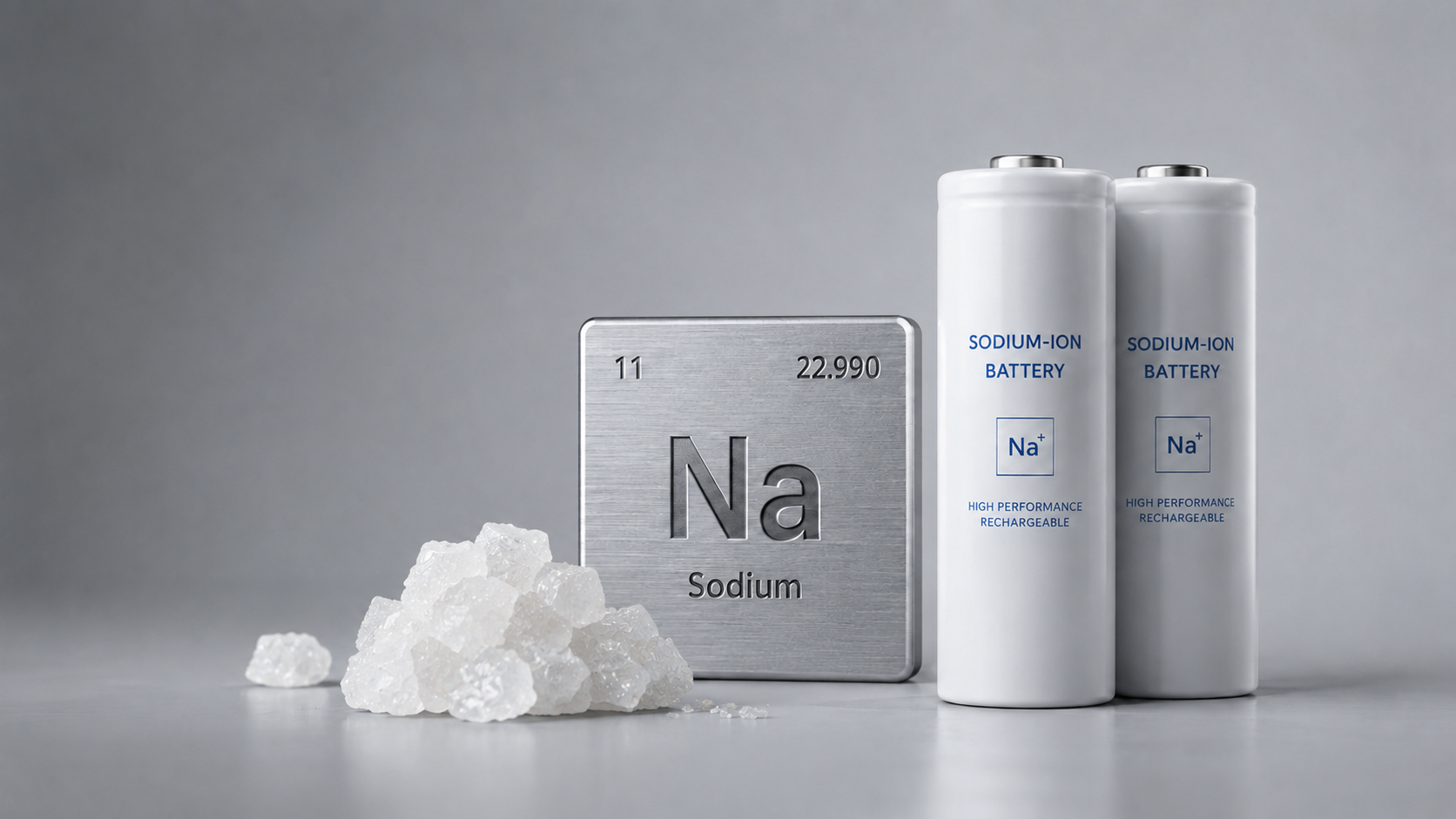
Battery manufacturer CATL officially launched the TENER Sodium Energy Storage System in Munich. This isn’t a lab experiment or a distant roadmap. It represents the world’s first fully validated, commercial-scale sodium-ion grid battery deployment.
CATL expects mass shipments of these units to hit 1 gigawatt-hour (GWh) by the end of 2026. Reaching that milestone means the technology has achieved full commercial maturity in both its production capacity and supply chain readiness.
The Lithium Bottleneck
As the world shifts toward cheaper solar and wind energy, we run into the problem of intermittency. We need massive energy storage to capture electricity when renewable generation peaks and release it when production inevitably drops.
Right now, attempting to build that kind of massive, grid-scale storage means relying almost entirely on lithium. While lithium-ion batteries are excellent at what they do, scaling them up for global grid storage is expensive and ties clean energy to constrained supply chains. If we’re going to store electricity on a planetary scale, we need a material that is cheaper and much easier to source.
Why Sodium Makes Sense
This is where CATL’s announcement changes the math. Viable sodium-ion batteries provide a cheaper, highly scalable alternative to lithium-constrained supply chains.
Because sodium is naturally abundant all over the planet, building batteries out of it effectively decouples the growth of energy storage from the physical limitations of rare earth mining. That scalability unlocks massive cost reductions for global electric grids attempting to store intermittent renewable energy.
Taking a promising battery chemistry from a laboratory breakthrough to a mass produced, deployable product is notoriously difficult. By drastically lowering the financial barriers with a proven product, utility companies and energy providers can start building flexible, resilient power networks without the immense capital traditionally required by lithium-based batteries.
The Bigger Picture
AI, robotics, and data centers run entirely on electricity. As these industries converge, they will drive an increasing demand for always-on power. Scalable storage solutions like CATL’s sodium-ion batteries bridge the gap between ultra-cheap renewable energy and the continuous power required by manufacturing and next-generation physical and digital AI. Ultimately, securing a post-lithium energy grid clears one of the most significant physical hurdles in our path toward a high-energy, fully electrified advanced civilization.
Leave a Reply