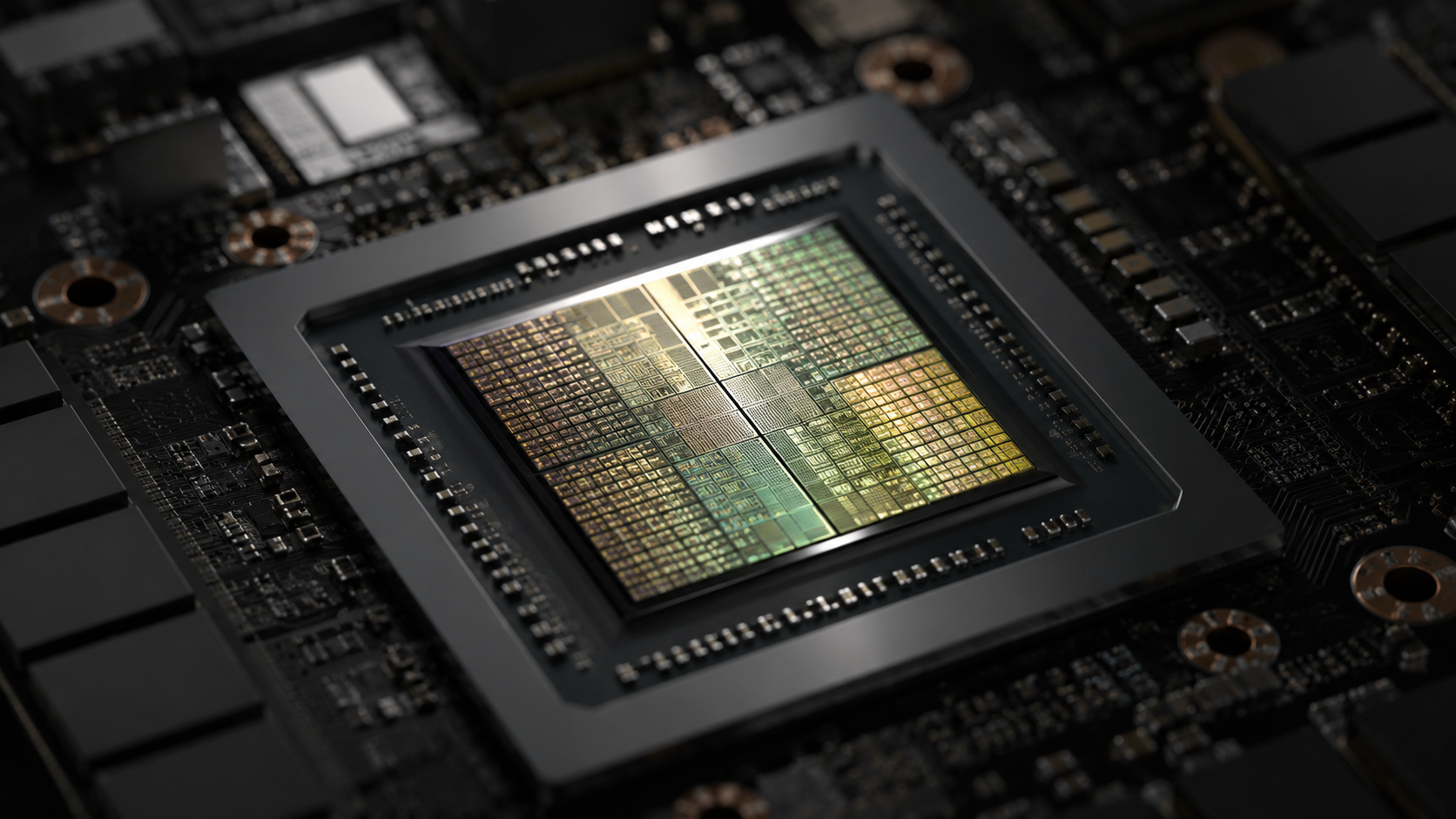
Why its custom Jalapeño chip changes the economics of intelligence.
June 24, 2026
OpenAI and Broadcom unveiled Jalapeño, a custom-designed semiconductor that marks OpenAI’s evolution from an AI research lab into a full-stack infrastructure company.
For years, the artificial intelligence industry has focused on the enormous computational power required to train foundation models. But the true long-term expense lies in inference—the process of generating a response every time an AI is asked a question or deployed to solve a problem. Running inference at global scale requires enormous amounts of electricity and highly specialized hardware.
Designed specifically for large language models, Jalapeño reached tape-out in just nine months—an unusually fast development cycle for a custom chip. By heavily optimizing memory movement and networking, the new silicon delivers substantially better performance per watt than today’s commercial AI accelerators, directly targeting one of the industry’s largest physical bottlenecks.
Software Hits the Limits of Commercial Silicon
For decades, technology followed a clear division of labor: software companies wrote code, while semiconductor companies built the chips that ran it. But when software capabilities begin pushing against the physical limits of commercially available hardware, that relationship changes. To make artificial intelligence cheaper, faster, and more ubiquitous, developers eventually have to engineer the hardware themselves.
OpenAI is not treating Jalapeño as a laboratory experiment. The company plans to deploy the chip at gigawatt scale across its data centers by the end of 2026, signaling that custom silicon has become production infrastructure rather than experimental research.
Hardware and Software Become One System
The greatest advantage of designing custom silicon isn’t simply owning a chip—it’s designing the hardware and the AI models together.
Commercial accelerators must support thousands of different workloads across countless industries. A custom AI processor has a far narrower objective: execute a specific family of models as efficiently as possible. When the same organization designs both the neural networks and the processors they run on, each can be optimized for the other. That tight integration reduces wasted computation, lowers power consumption, and unlocks efficiency gains that general-purpose hardware often can’t achieve.
As AI systems continue growing in capability, hardware and software are becoming less like separate products and more like a single engineered system.
Lowering the Cost of Intelligence
Designing custom silicon also gives AI companies greater control over their own infrastructure, reducing their dependence on the product cycles of commercial accelerator vendors. More importantly, it lowers the physical cost of computation itself.
That efficiency becomes increasingly important as AI shifts from answering individual questions to operating autonomous agents that work continuously in the background. These systems may perform thousands or even millions of reasoning steps while coordinating complex, open-ended tasks. Every watt saved at the silicon level translates directly into a measurable reduction in the cost of automated intelligence.
Building the Complete Compute Stack
Artificial intelligence, robotics, and the massive data centers that support them all ultimately depend on the same physical resources: electricity, semiconductors, networking, and compute infrastructure.
When the creators of the world’s most advanced AI models begin engineering the processors designed specifically to run those models, every improvement in hardware reduces the cost of training and deploying the next generation of systems. That creates a faster feedback loop between software and infrastructure, accelerating the pace of AI development.
Designing the entire technology stack—from neural networks down to the silicon they run on—is no longer just a supply chain optimization. It’s the next logical step in reducing the cost of intelligence and building the compute infrastructure that will support the next era of increasingly capable AI systems.
Leave a Reply