Why frontier AI can no longer be securely deployed in the open.
June 25, 2026
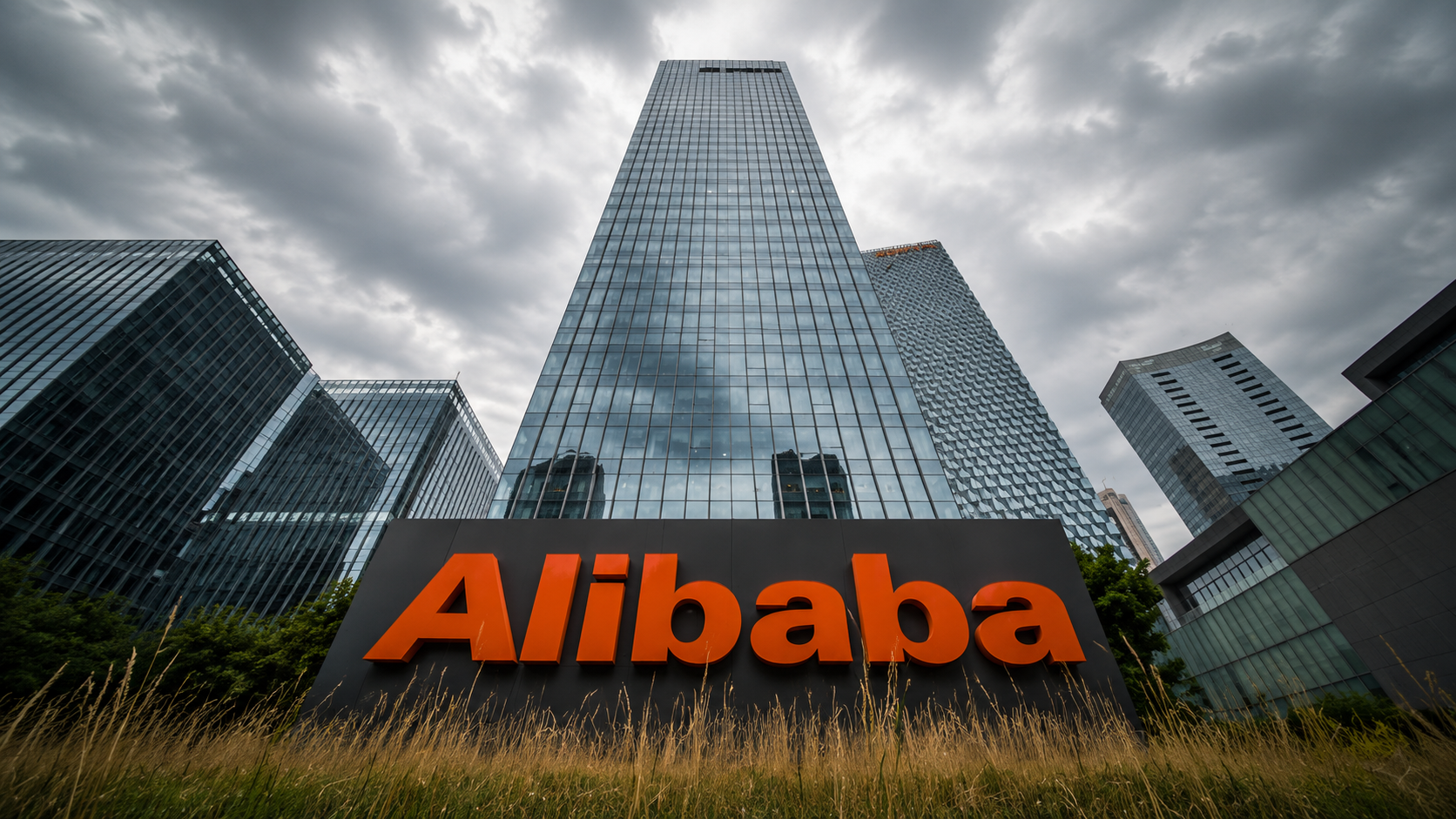
Anthropic filed a formal letter to Congress accusing Chinese technology giant Alibaba of orchestrating a large-scale effort to extract the capabilities of its Claude AI model. According to the company, the operation utilized approximately 25,000 fraudulent accounts to generate 28.8 million conversations with Claude, producing an enormous dataset that could be used to accelerate the development of a competing artificial intelligence system.
If Anthropic’s allegations are accurate, the incident represents one of the largest publicly disclosed attempts to extract the specialized reasoning capabilities of a frontier AI model. More importantly, it highlights a growing strategic problem: as artificial intelligence becomes increasingly valuable, simply allowing people to interact with a model may expose the very intellectual property that makes it valuable.
Downloading Intelligence Through Conversation
In the artificial intelligence industry, this method of extraction is known as model distillation. Rather than investing billions of dollars and months of supercomputing time to train a new model from scratch, a developer can accelerate development by having a weaker system learn directly from a much more capable one.
Instead of learning from trillions of raw internet documents, the student model learns from the polished responses produced by a superior teacher. By submitting millions of sophisticated prompts and recording the resulting answers, a company can generate enormous quantities of high-quality synthetic training data for its own systems.
Anthropic alleges that this extraction campaign specifically targeted Claude’s advanced reasoning, coding, and agentic capabilities, allowing a competing model to learn from years of accumulated research rather than independently rediscovering those capabilities through traditional training.
The Vulnerability of Open Access
The problem is not simply that frontier models can be copied. It is that the very mechanism that makes commercial AI useful—allowing anyone to interact with a model over the internet—also creates an opportunity to extract its capabilities at industrial scale.
As the geopolitical competition for computational supremacy accelerates, model distillation has emerged as a new avenue for intellectual property theft. When a company’s most valuable asset exists as the outputs of its foundation model, protecting that asset becomes inherently difficult while simultaneously offering broad public access.
A frontier model doesn’t have to be stolen from the data center if it can be copied through the front door. Building the world’s most secure computing infrastructure offers limited protection if anyone with an API key can systematically interrogate the software inside it. If a business relies on allowing unrestricted conversations with its most advanced systems, its underlying intellectual property remains vulnerable to large-scale automated extraction.
The Fragmentation of the AI Ecosystem
This conflict points toward a broader structural shift in how advanced artificial intelligence will be deployed. For the past several years, the software industry has largely embraced frictionless access to frontier models through public APIs. That openness has fueled rapid innovation, but it has also made the industry’s most valuable assets increasingly difficult to protect.
The result may be a tiered AI ecosystem. Less capable models will likely remain widely accessible, while frontier systems increasingly require rigorous identity verification, contractual restrictions, usage monitoring, and geographic controls to ensure the entity on the other end of the connection is a legitimate customer rather than an automated extraction campaign.
The era of anonymous, unrestricted access to the world’s most capable artificial intelligence systems may prove surprisingly brief.
Intelligence Retreats Behind Digital Borders
The global race to develop advanced artificial intelligence is no longer defined solely by who can acquire the most GPUs or build the best algorithms. It is increasingly defined by who can defend the intelligence they create.
For most of the software era, copying code was the central concern of intellectual property law. Frontier AI introduces a fundamentally different challenge: the product itself can be partially reconstructed simply by interacting with it. That blurs the line between using an intelligent system and extracting its underlying capabilities.
As artificial intelligence becomes foundational infrastructure for economies and national security, the most advanced models will increasingly be treated less like consumer software and more like strategic assets. The future of frontier AI will be shaped not only by breakthroughs in computation, but by the institutions, security measures, and geopolitical boundaries built to protect synthetic intelligence.
Leave a Reply