
Why there is no single path to intelligence
Most people imagine intelligence as a ladder. Smarter means moving upward. Humans sit comfortably at the top, looking down at the rest of the animal kingdom. Modern advancements in biology, neuroscience, and artificial intelligence suggest a very different picture: intelligence isn’t one thing, but rather a vast, multidimensional landscape.
Consider a creature with no brain, no neurons, and no central nervous system. Now imagine that same organism solving a maze. The slime mold Physarum polycephalum is a single-celled organism that spreads through its environment in a pulsating, yellowish web in search of food. In one famous experiment, researchers placed oat flakes at locations corresponding to a map of Tokyo. As the slime mold explored, it gradually strengthened efficient pathways and eliminated redundant ones. Within hours, the brainless organism had produced a network remarkably similar to the actual Tokyo rail system—a marvel of civil engineering that took human planners decades to optimize.
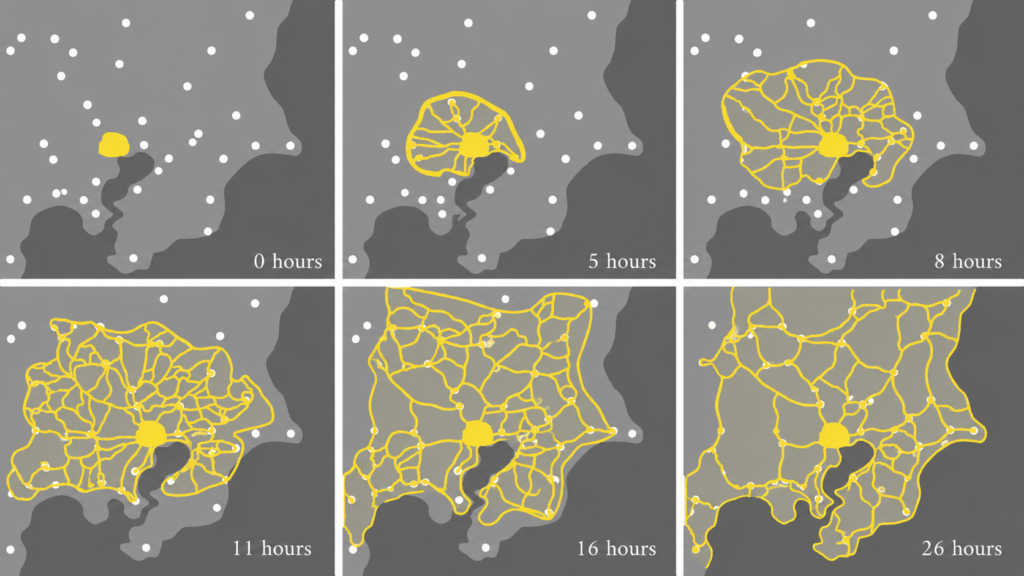
The slime mold wasn’t consciously planning a transportation network. Yet it was undoubtedly solving a problem, adapting to its environment, finding efficient routes, and achieving a goal from a state of uncertainty. Examples like this challenge our deepest assumptions about intelligence. We instinctively associate cognitive ability with human reasoning, language, and abstract thought. We assume it requires a brain. But nature suggests a broader, more profound truth: evolution doesn’t optimize for “intelligence” in the abstract. It optimizes for solving problems. Intelligence is simply what that successful problem-solving process looks like from the outside.
Beyond the Ladder
Intelligence can be understood as the capacity to learn, adapt, reason, and solve problems to achieve specific goals. The question is this: What kinds of problem-solving architectures exist in the world?
Once we stop looking exclusively for human-like reasoning, we discover that intelligence is an entire family of specialized problem-solving capacities. There isn’t one single way to build an intelligent system. Because different organisms face entirely different evolutionary challenges, nature has repeatedly discovered different problem-solving strategies, each uniquely adapted to surviving a different kind of ecosystem.
Navigating Space
One of the most profound cognitive abilities found in nature is the capacity to navigate physical space. We often take it for granted, but moving efficiently through a dynamic, three-dimensional environment requires an incredibly sophisticated problem-solving strategy.
Honeybees routinely travel miles from their hives through complex, shifting terrain to locate flowers. Upon returning, they communicate precise distance and directional vectors to their hive-mates using an intricate “waggle dance.” Their ability to map and navigate physical space far exceeds the unassisted capacity of most humans, despite having brains smaller than a sesame seed. Similarly, migratory birds use magnetoreception to traverse thousands of miles across oceans and continents, guided by magnetic fields and celestial cues. Navigation isn’t just a basic biological reflex; it’s a highly specialized cognitive engine, an architecture designed specifically to solve the mathematics of survival in physical space.

Planning for the Future
In another region of the landscape, we find cognitive architectures built to solve for future problems. Planning requires memory, the ability to delay immediate gratification, and the capacity to visualize scenarios that haven’t happened yet.
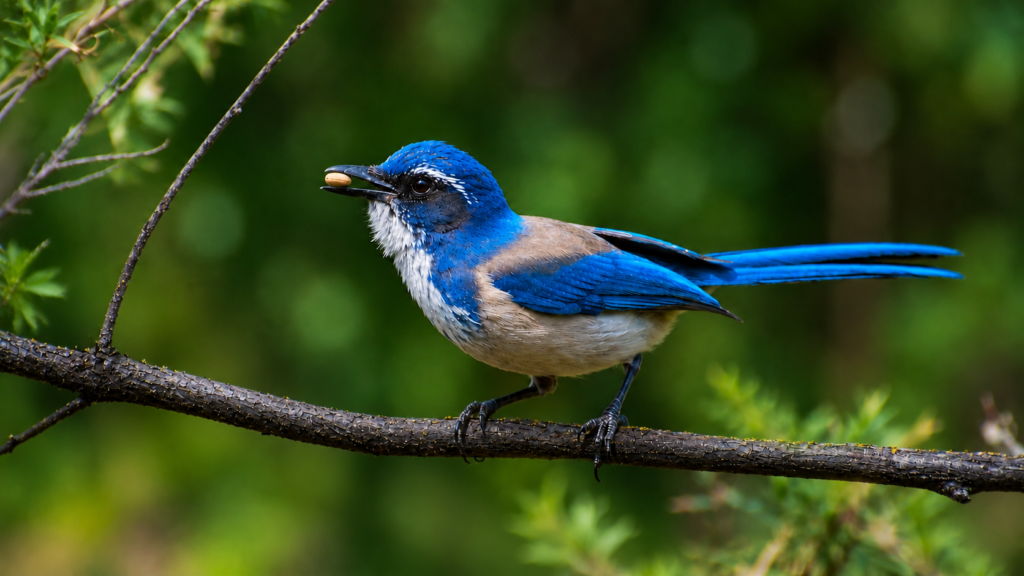
Corvids, the family of birds that includes ravens and scrub jays, are masters of this domain. Scrub jays will hide food in hundreds of distinct locations, remembering not only where they cached the food, but when, allowing them to retrieve highly perishable items before they rot. Furthermore, if a jay notices another bird watching it hide food, it will return later in secret to move the cache, anticipating the future risk of theft.
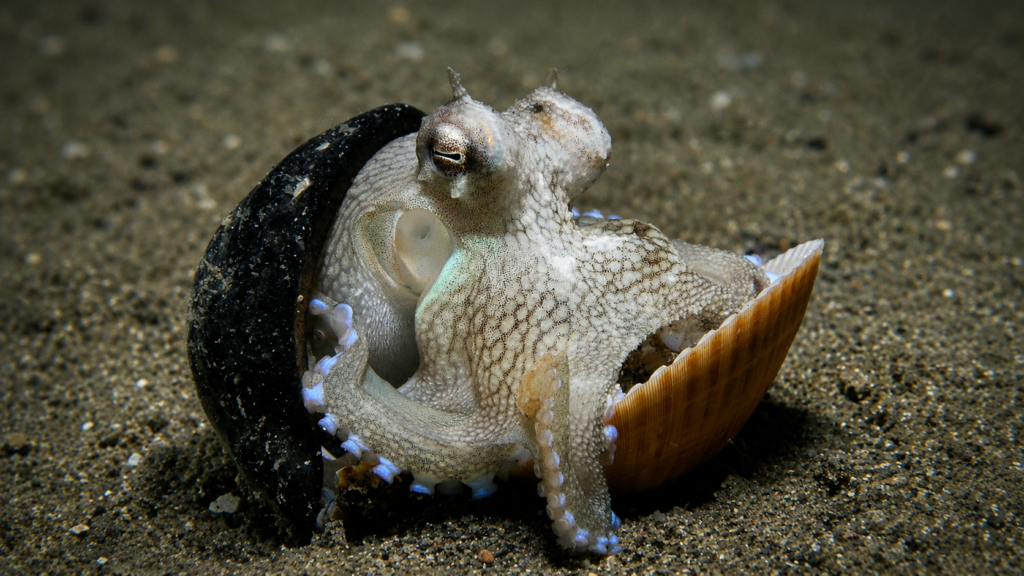
Octopuses also demonstrate remarkable foresight, often carrying shells across the ocean floor to assemble later as protective armor. This future-oriented behavior shows a profound mastery of temporal problem-solving, manipulating the present to secure a desired outcome tomorrow.
Collective Intelligence
Sometimes, the architecture of intelligence isn’t housed within a single body at all. Evolution has repeatedly discovered that grouping simple individuals together can solve environmental challenges that no single member could even comprehend.
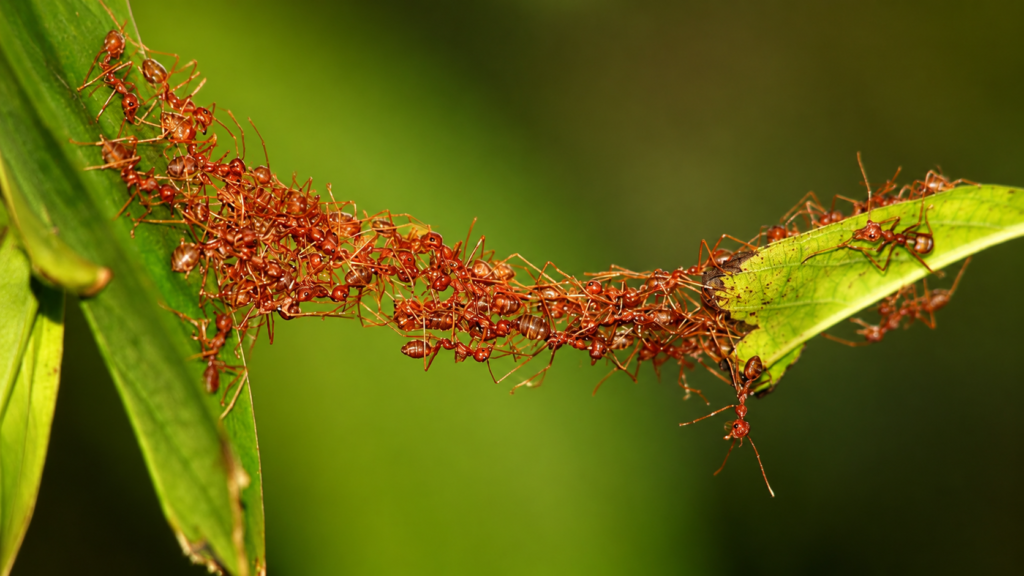
We see this in the collective logistics of ants. Individual ants possess highly limited cognitive abilities, yet an ant colony acts as a massive, distributed problem-solving engine. Colonies dynamically allocate labor, regulate the internal temperature of nests, cultivate fungal agriculture, and redirect traffic around obstacles.
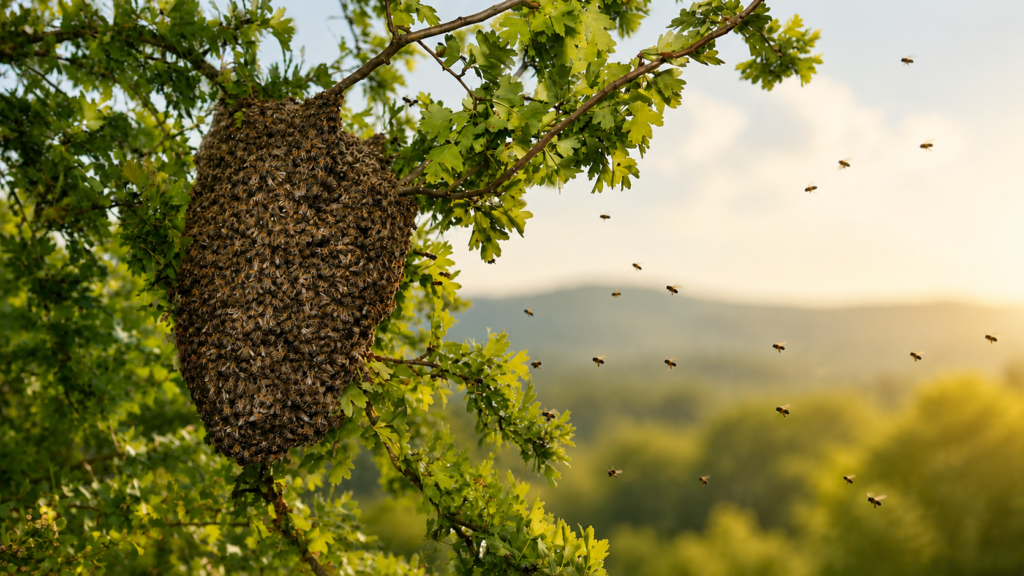
Similarly, honeybee swarms engage in a highly structured, democratic decision-making process to evaluate potential hive sites and reach a consensus that reliably selects the optimal home. In these cases, the intelligence exists entirely in the space between agents, proving that nature can build highly competent problem-solving architectures out of decentralized, cooperating parts.
Social Intelligence
A closely related but fundamentally distinct problem-solving capacity operates in the social realm. Where collective intelligence is about many simple agents acting together as a single engine, social intelligence requires complex individuals to understand, predict, and cooperate with one another.
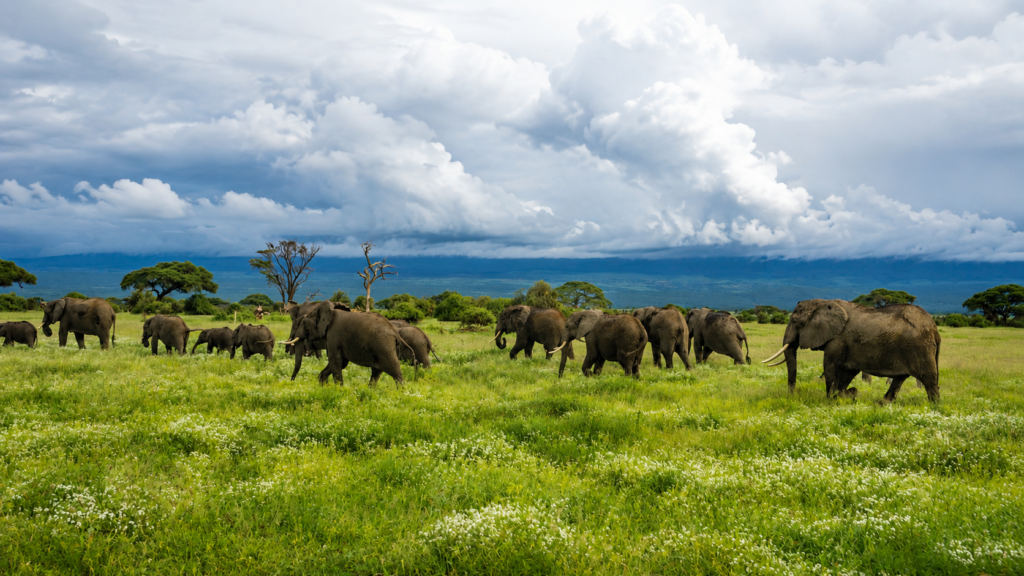
This domain involves communication, cultural transmission, and the ability to attribute internal states to others—a capacity known as theory of mind. Chimpanzees form complex political alliances and engage in strategic deception to gain status within their troops. Dolphins possess signature whistles acting as names, allowing them to coordinate intricate hunting strategies across murky waters. Elephants exhibit profound social memory, grieving their dead and passing down generational knowledge about the locations of distant watering holes during droughts. For these species, the primary problem space being navigated isn’t just physical or temporal; it is the high-stakes, dynamic web of individual relationships.
Intelligence Without a Brain
Perhaps the most philosophically shattering region of the intelligence landscape lies within our own bodies. Every multicellular organism begins as a microscopic collection of cells. During embryonic development, those cells must communicate, coordinate, and sculpt complex anatomical structures from scratch.
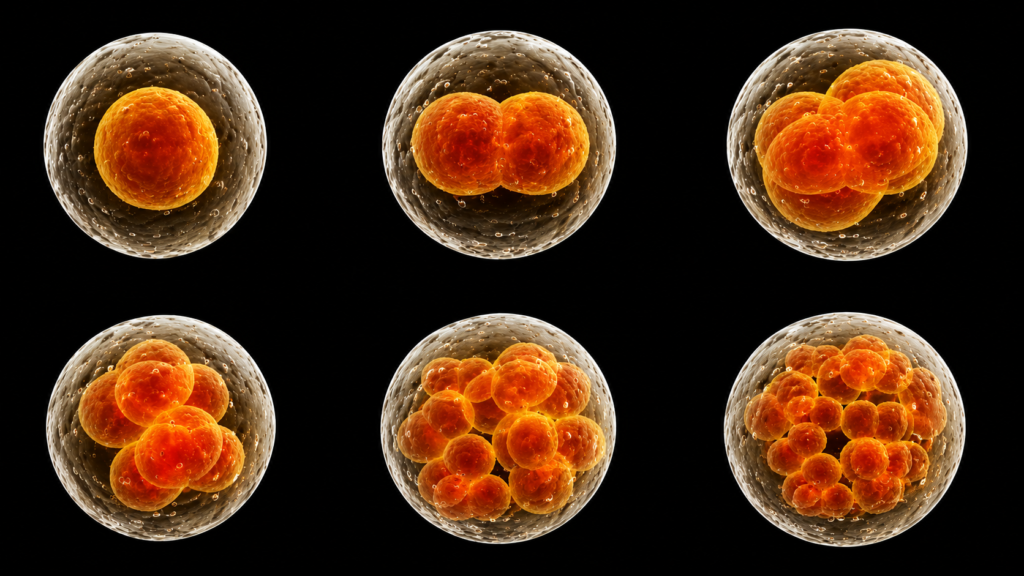
Biology professor Michael Levin’s research reveals that this process, known as morphogenesis, isn’t just the blind execution of a hardcoded genetic blueprint. If it were merely a rigid program, any deviation or injury would lead to permanent failure. Instead, cells collectively work toward target states, effectively navigating an “anatomical space” to construct, maintain, and repair bodies.
When a salamander loses a limb, the cells at the wound site don’t just mindlessly divide. They communicate to figure out what is missing, rebuild the precise geometry of the arm, and—crucially—know exactly when to stop growing because the target morphology has been reached.
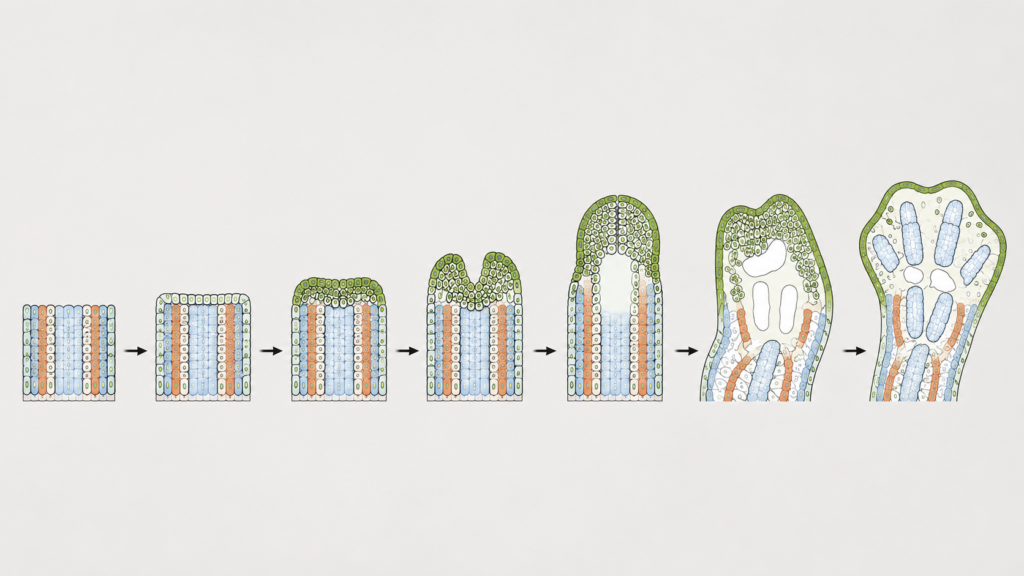
In laboratory settings, Levin’s team has demonstrated that cells can be persuaded to build entirely new anatomical structures if their communication networks are altered. This work is philosophically vital because it proves that profound problem-solving doesn’t require a top-down executive controller or a brain. Cells themselves are competent agents. Nature simply applies the same evolutionary optimization to the problem of building a body as it does to finding food in a maze.
Conceptual Intelligence
Just as biological evolution has discovered varied paths across the intelligence landscape, human engineering is beginning to map entirely new ones. Modern artificial intelligence systems represent a massive spike in conceptual intelligence—a specialized system for navigating symbols, language, and abstraction.
Systems such as ChatGPT, Claude, Gemini, and DeepSeek excel at synthesizing vast amounts of information, writing software, and discovering abstract patterns in data that would take humans centuries to untangle. They possess a superhuman grasp of symbolic relationships and logic.
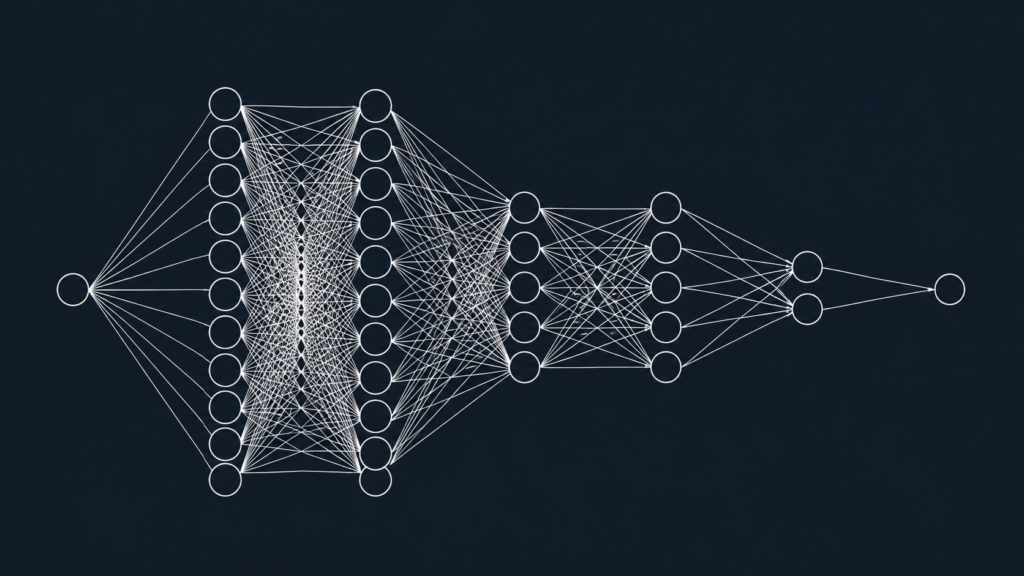
Yet, their placement on the landscape is highly irregular. Because these algorithms represent a fundamentally different engineered approach to solving problems, they completely lack the competencies we take for granted in biological life. They lack the physical embodiment and spatial awareness that a honeybee uses to navigate a garden. They lack the self-maintenance and morphological intelligence that a flatworm uses to heal a wound. They struggle with long-term autonomy, unable to sustain self-directed goals over extended periods without human prompting. They are brilliant in the realm of concepts, but they are entirely absent in the realm of physical survival.
The Landscape
This multidimensional reality fundamentally breaks the traditional ladder model of intelligence. For centuries, we assumed cognitive development was a vertical climb, believing that a larger brain naturally led to a superior, more human-like intellect. The problem is that nature does not actually resemble a ladder. When we look closely at how biological and artificial systems operate, the linear hierarchy completely collapses.
A bee may vastly outperform a human at spatial navigation and path integration. An ant colony may outperform a human organization at distributed logistics. An AI system can outperform a human at searching vast conceptual spaces. There isn’t one way to build an intelligent system, because different systems represent specialized solutions adapted to specialized challenges.
But if this landscape is so vast, what makes humans seem so exceptional? We aren’t simply “more intelligent” in every direction. Instead, our unique evolutionary achievement lies in integration. Humans combine spatial, temporal, conceptual, and social intelligence through the powerful cognitive glue of language and cumulative culture. We teach each other, cooperate across vast networks, and share knowledge across generations. Human civilization itself emerges not from a single, overpowering general intelligence, but from our unusual ability to weave these specialized problem-solving capacities together.
Exploring New Paths
Evolution does not optimize for intelligence itself; it relentlessly discovers new ways to solve problems, each beautifully adapted to a different environment.
As new forms of artificial intelligence continue to emerge—and as biology continues to reveal unexpected forms of cognition in cells, colonies, and ecosystems—we must expand our understanding of what intelligence can become. Artificial intelligence may become the first intelligent architecture designed by evolution’s products rather than by evolution itself. The future of intelligence won’t be about climbing higher on a familiar ladder. It will be about discovering entirely new architectures, finding alien solutions to complex challenges, and recognizing that the landscape of problem-solving is far vaster than we ever imagined.
References
Barron, A. B., & Klein, C. (2016). What insects can tell us about the origins of consciousness. Proceedings of the National Academy of Sciences, 113(18), 4900–4908. https://doi.org/10.1073/pnas.1520084113
Chollet, F. (2019). On the measure of intelligence. arXiv. https://doi.org/10.48550/arXiv.1911.01547
Chollet, F., Knoop, M., Kamradt, G., & Landers, B. (2024). ARC Prize 2024 technical report. arXiv. https://doi.org/10.48550/arXiv.2412.04604
Clayton, N. S., Bussey, T. J., & Dickinson, A. (2003). Can animals recall the past and plan for the future? Nature Reviews Neuroscience, 4(8), 685–691. https://doi.org/10.1038/nrn1180
James, W. (1890). The principles of psychology (Vols. 1–2). Henry Holt and Company.
Levin, M. (2022). Technological approach to mind everywhere: An experimentally grounded framework for understanding diverse bodies and minds. Frontiers in Systems Neuroscience, 16, Article 768201. https://doi.org/10.3389/fnsys.2022.768201
Levin, M. (2023). Bioelectric networks: The cognitive glue enabling evolutionary scaling from physiology to mind. Animal Cognition, 26(6), 1865–1891. https://doi.org/10.1007/s10071-023-01780-3
Mather, J. A. (2008). Cephalopod consciousness: Behavioural evidence. Consciousness and Cognition, 17(1), 37–48. https://doi.org/10.1016/j.concog.2006.11.006
Paul, B., Schmiedek, P., Chittka, L., & Perry, C. J. (2022). Bumblebees play with objects even in the absence of rewards. Animal Behaviour, 194, 239–251. https://doi.org/10.1016/j.anbehav.2022.10.002
Leave a Reply