
How self-awareness, pain, memory, and planning reshape the debate over animal minds
How can we know whether animals are conscious?
This question remains one of the most enduring mysteries in science and philosophy. When we watch a dog react to a thunderstorm, an octopus navigate a puzzle, or a raven plan for the future, we are observing behavior. We see movement, expression, posture, and action unfold. But we cannot directly perceive the subjective experience—the “what-it-is-like”—of being that animal.
In philosophy, this is famously known as the “hard problem” of consciousness, a term popularized by David Chalmers. The hard problem arises because there is an explanatory gap between the objective mechanisms of a brain and the subjective quality of experience. Because subjective experience is accessible only from the first-person perspective, skeptics often argue that our attributions of animal consciousness are projections of our own experience rather than direct evidence of another mind.
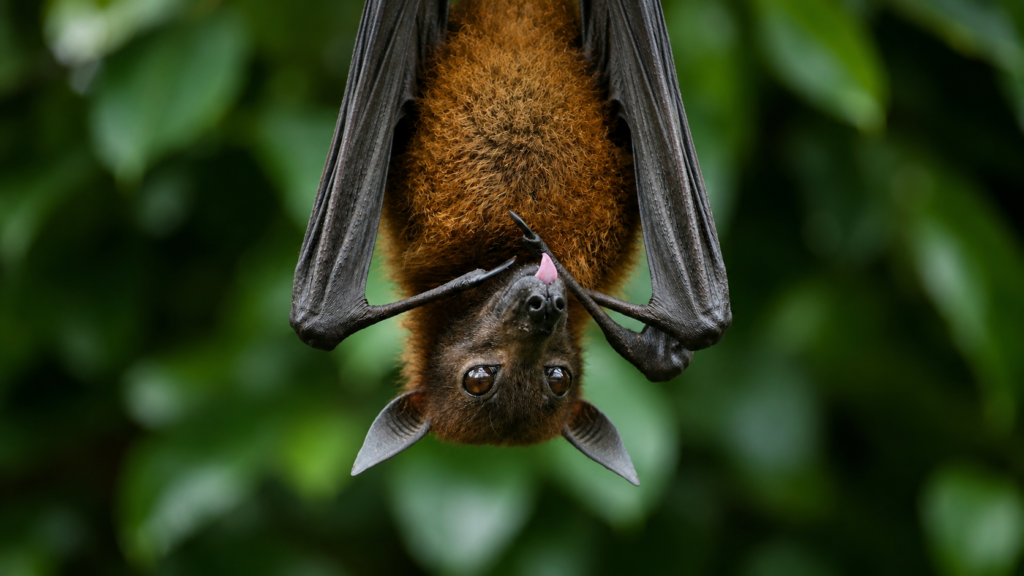
However, the study of animal minds has grown more sophisticated. We are moving away from the idea that consciousness is a binary switch—that an animal is either “on” or “off”—and toward a multidimensional view. As philosopher Jonathan Birch has argued, sentience is best understood not through a pass/fail test, but by looking at different dimensions of mental life: perception, evaluation, integration across time, and self-awareness. When we do this, the question of animal consciousness shifts. It ceases to be about finding a single “smoking gun” and becomes about the convergence of evidence.
The Limits of the Mirror Test
For decades, one of the most influential approaches to studying animal consciousness has been the mirror test. Popularized by psychologist Gordon Gallup, the test is straightforward: researchers place a mark on an animal’s body and then allow the animal to view itself in a mirror. If the animal touches the mark on its own body rather than treating the reflection as another animal, the behavior provides evidence of bodily self-recognition.
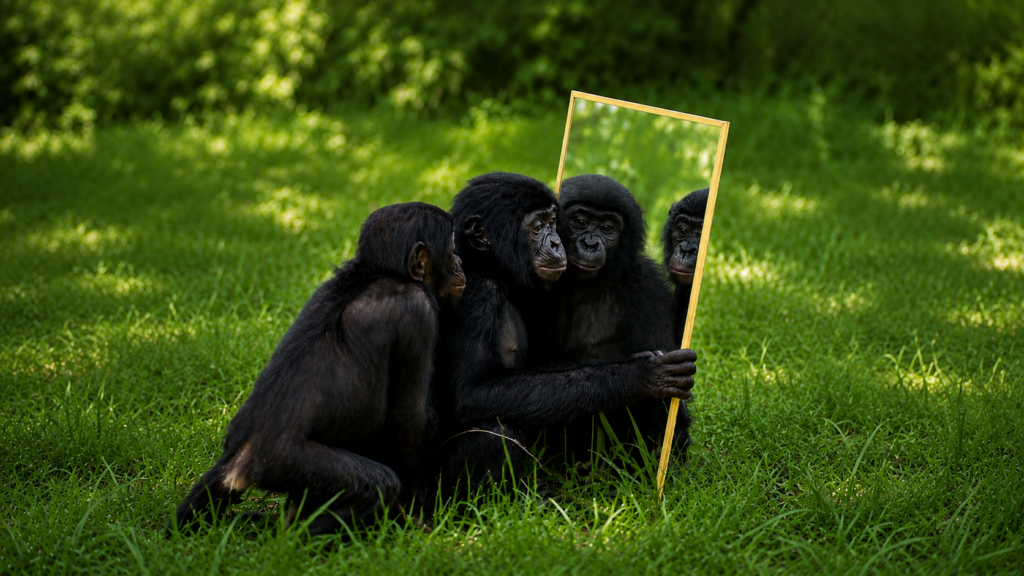
When animals like chimpanzees pass this test, it is a significant finding. It suggests that they have some awareness of their own physical presence in the world. But the mirror test is also a classic example of why single-metric approaches are inadequate. Failing the mirror test does not demonstrate an absence of consciousness, because the test measures only one form of self-recognition and leaves many other cognitive capacities unexamined.
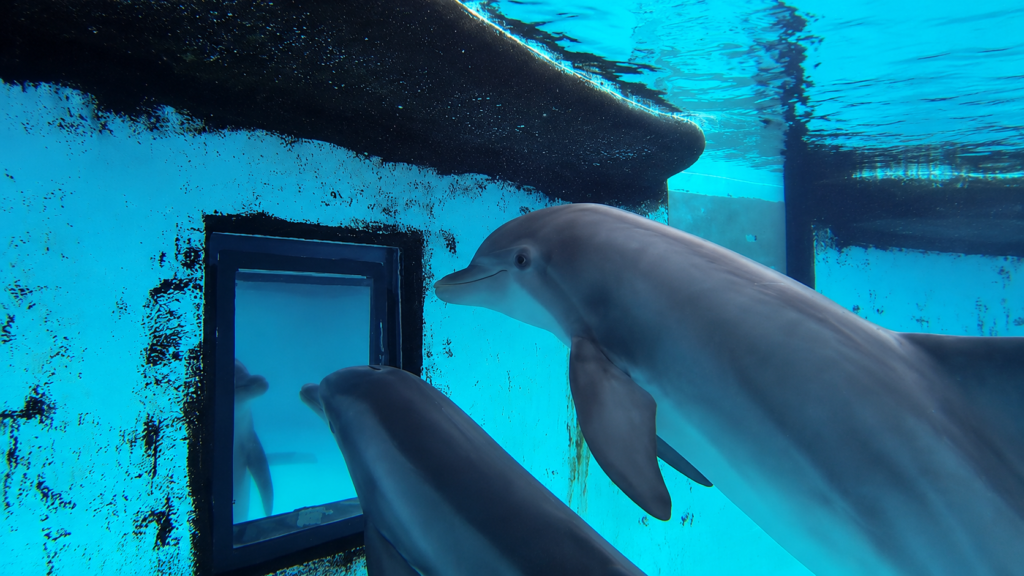
The limitations of the mirror test point toward a broader question: if one experiment is not enough, how do we build a rational case for consciousness? We look for patterns across multiple domains of cognition and behavior.
Multiple Lines of Evidence
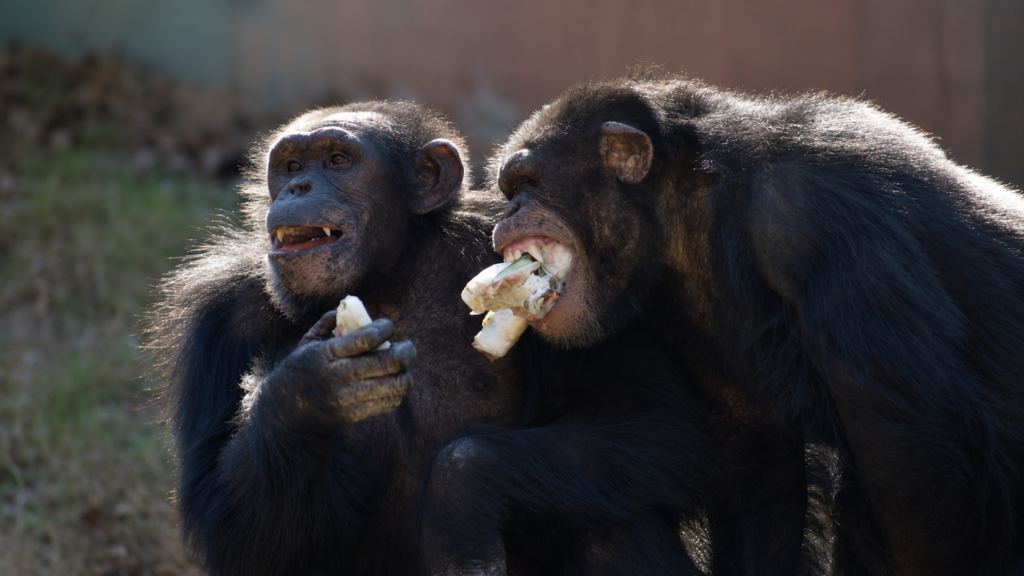
Consider the social life of chimpanzees. Beyond mirror self-recognition, they show sensitivity to what others can see and know. In some studies, subordinate chimpanzees take food when dominant individuals cannot see it, using another’s visual perspective to guide their own behavior. This suggests they are not simply reacting to others, but tracking what others can see and know.
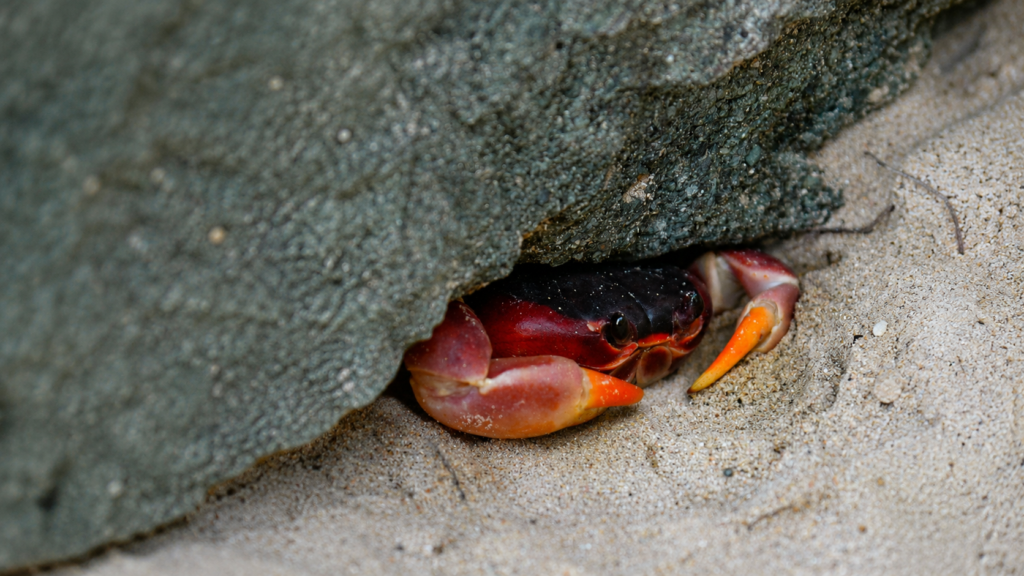
A second line of evidence comes from pain and affect. Studies of shore crabs have shown that they avoid shelters previously associated with electric shocks. Their choices also vary depending on the intensity of the shock and the value of the shelter. This indicates a motivational trade-off: the crab is weighing risks against rewards. The response is not merely a reflexive movement away from a stimulus. It suggests a more complex negotiation between discomfort, safety, and environmental need.
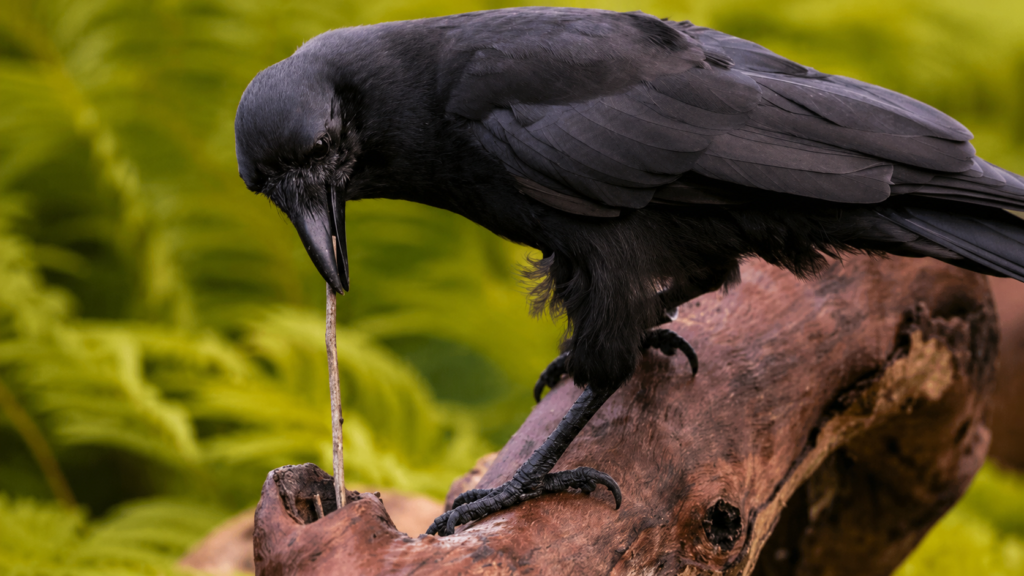
The evidence also extends to future-oriented thinking and representation. Ravens have been observed saving tools for future use, waiting for the right moment to use them for a delayed opportunity. This requires a form of cognition that extends beyond the present moment.
Similarly, honey bees, after being displaced, can take novel homeward routes that they have never flown before. This suggests that they are not merely following fixed paths, but using an internal representation of space to orient themselves.

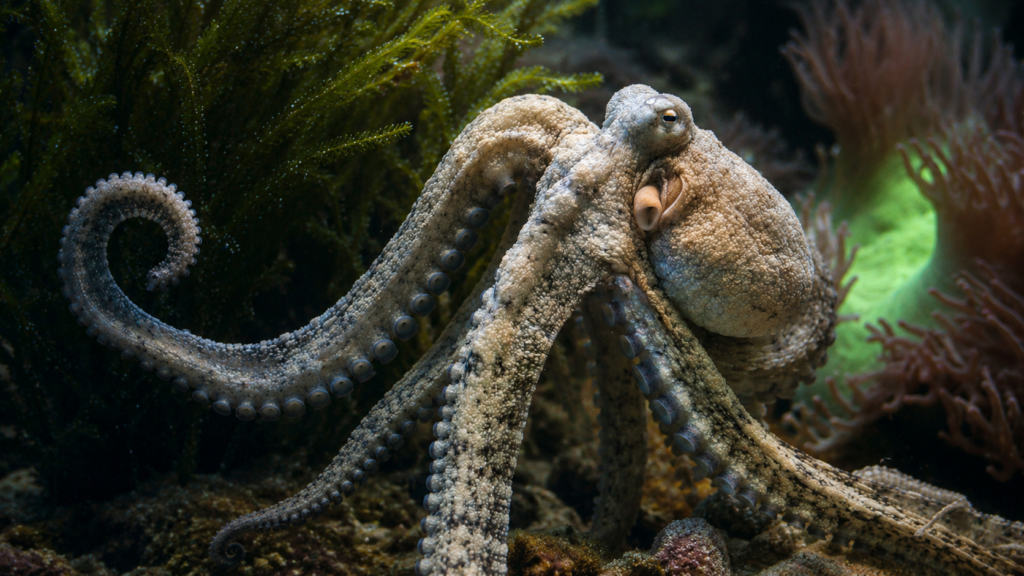
Another important line of evidence comes from flexible problem-solving in cephalopods. An octopus, when faced with a novel puzzle—such as a container that must be manipulated to retrieve food—does not simply repeat a rote behavior. It explores, modifies its strategy based on the outcome, and solves the problem through trial, adjustment, and persistence. This kind of behavioral flexibility is difficult to reduce to simple reflex. It requires the organism to maintain a goal while navigating obstacles, a pattern that points toward an integrated form of cognition.
Recognizing Other Minds
As evidence accumulates across these different domains, an important question emerges about how we actually recognize minds in the first place. The fact that animal consciousness cannot be observed from the inside does not make it unknowable. In ordinary life, we do not usually experience other people or animals as empty bodies that might have minds. We often experience them as minded beings from the start.
Something similar can happen in our encounters with animals. A dolphin’s curiosity, a chimpanzee’s social awareness, or a raven’s watchful problem-solving may strike us immediately as the activity of a mind. This kind of recognition is not a substitute for science, but it helps explain why the question of animal consciousness arises so naturally.
Scientific evidence then deepens and disciplines this recognition. When we see consistent patterns of learning, trade-offs, planning, social awareness, and behavioral flexibility across very different species, those patterns become increasingly difficult to dismiss as mere reflex or instinct. They suggest organisms actively navigating their environments in ways that reflect integrated mental lives.
The point is not to demand mathematical proof before taking animal consciousness seriously. That would set the evidentiary bar higher for animals than we do for humans. A better approach combines direct recognition with empirical evidence. In many cases, the accumulated evidence supports the view that animals are not merely reacting to stimuli, but experiencing the world in their own ways.
A Multidimensional View of Consciousness
Taken together, these different lines of evidence suggest that animal consciousness is unlikely to be a simple binary switch. The mirror test, studies of pain, planning tasks, navigation experiments, and problem-solving research do not stand alone. They point toward a picture of animal minds that is richer and more complex than earlier theories often assumed.
The raven’s foresight, the crab’s trade-offs, the chimpanzee’s social awareness, and the octopus’s flexible problem-solving are strong reasons to think the animal world contains many kinds of subjects. By moving away from single-test thresholds and embracing a multidimensional view, we do not solve the hard problem of consciousness. But we gain a clearer and more accurate understanding of the many minds that share our world.
References
Andrews, K. (2015). The Animal Mind: An Introduction to the Philosophy of Animal Cognition. Routledge.
Birch, J. (2020). Dimensions of animal consciousness. Trends in Cognitive Sciences, 24(10), 789–801.
Chalmers, D. J. (1995). Facing up to the problem of consciousness. Journal of Consciousness Studies, 2(3), 200–219.
Elwood, R. W., & Appel, M. (2009). Pain experience in crustaceans? Animal Behaviour, 77(3), 563–570.
Gallup, G. G. (1970). Chimpanzees: Self-recognition. Science, 167(3914), 86–87.
Kabadayi, C., & Osvath, M. (2017). Ravens parallel great apes in flexible planning for tool-use and bartering. Science, 357(6347), 202–205.
Mather, J. A., & Anderson, R. C. (1999). Exploration, play, and proto-tools in Octopus dofleini. Journal of Comparative Psychology, 113(3), 333–338.
Menzel, R., Greggers, U., Smith, A., Berger, S., Brandt, R., Brunke, S., … & Stach, S. (2005). Honey bees navigate according to a map-like spatial memory. Nature, 435(7039), 205–208.
Leave a Reply