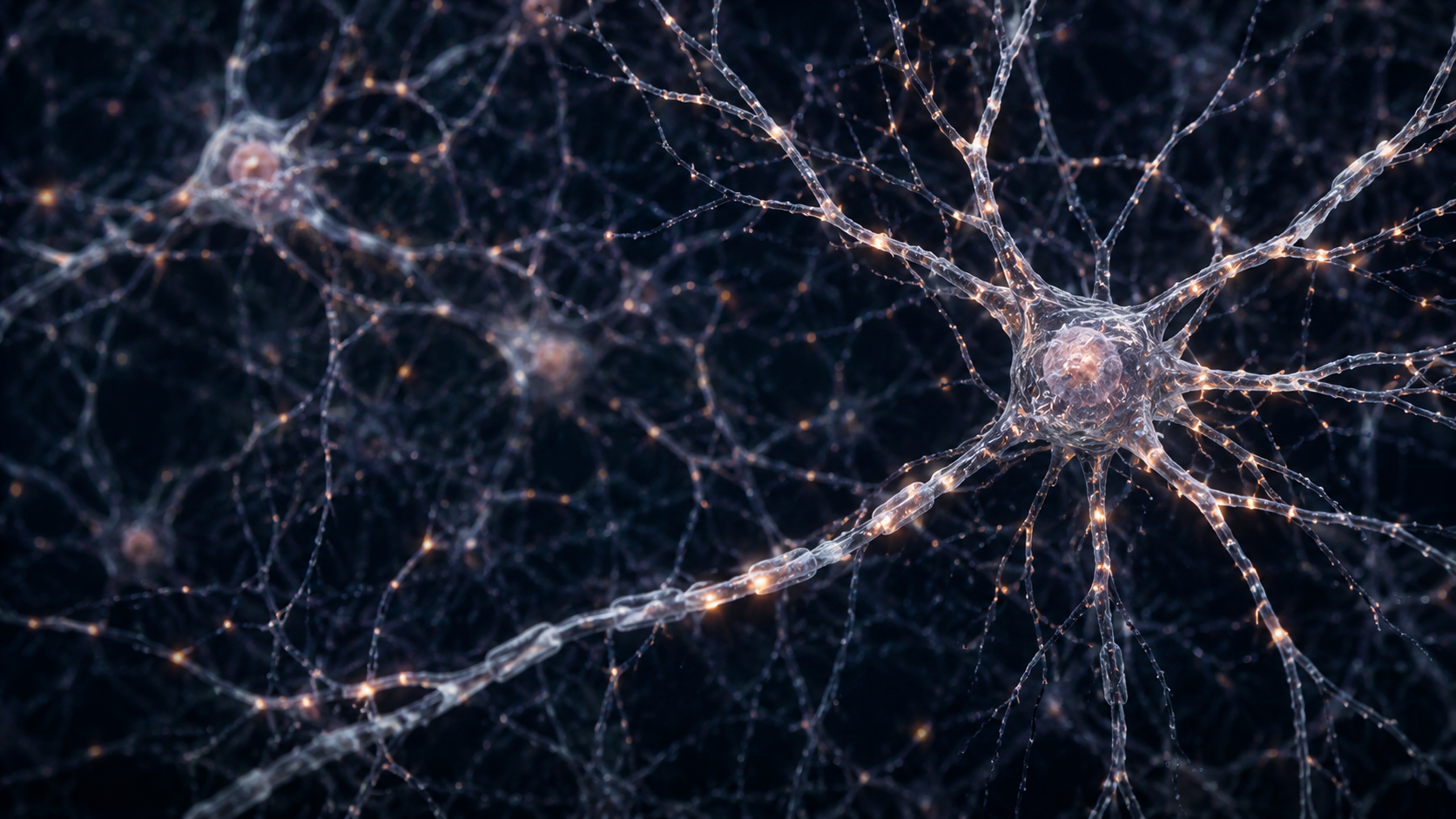
How AI could help discover the physical basis of consciousness
Artificial intelligence has revived one of the oldest questions in philosophy: what makes consciousness possible?
As AI systems become increasingly capable, many people assume that continued advances in intelligence will eventually produce conscious machines. Others argue that no amount of computational sophistication can generate subjective experience. Beneath these disagreements lies a deeper question that remains unresolved: what is the relationship between consciousness and the physical systems that produce it?
The answer matters because artificial consciousness depends on it. If consciousness is simply a matter of organizing information in the right way, sufficiently advanced AI systems may eventually become conscious regardless of the material from which they’re built. But if consciousness depends on particular physical properties of biological brains, then increasingly capable software alone may never be enough.
There is, however, another possibility. Consciousness may depend neither on abstract computation alone nor on biology specifically, but on a set of physical properties that could exist in multiple forms of matter. If so, the path to artificial consciousness may require discovering and engineering entirely new substrates capable of supporting conscious experience. In that case, AI’s most important role may not be becoming conscious itself, but helping us uncover the physical foundations of consciousness.
Competing Views of Artificial Consciousness
The philosophy of mind is often divided into two broad positions.
The first holds that consciousness is substrate-independent computation. Associated with classical functionalism, this view argues that mental states are defined by their functional organization rather than their physical material. If a system instantiates the correct computational structure—the causal organization governing how information flows between perception, memory, reasoning, decision-making, and behavior—it can be conscious regardless of whether it is built from neurons, silicon, or some other medium.
The second position argues that consciousness is substrate-dependent and uniquely biological. According to this view, subjective experience depends on the specific biochemical and neurophysiological properties of living brains. Consciousness is not merely the result of processing information, but of the particular biological processes that carry out those functions.
Both positions face difficulties. Pure functionalism faces the challenge of explaining whether every property relevant to consciousness can be specified at the functional level alone. Biological exclusivism, on the other hand, risks assuming without good reason that only carbon-based organisms can be conscious.
A third possibility may lie between these extremes.
Constrained Multiple Realizability
Constrained Multiple Realizability accepts that consciousness may be realizable in more than one physical substrate while rejecting the claim that consciousness is independent of physical implementation.
According to Constrained Multiple Realizability, consciousness depends on specific physical and organizational properties. These may include causal, electromagnetic, thermodynamic, informational, or other constraints. Consequently, not every information-processing system will satisfy the relevant constraints. Consciousness may be multiply realizable—the same mental property, state, or event can be implemented by entirely different physical materials—but only within a limited range of physical architectures.
This idea has overlap with several contemporary theories. Searle’s biological naturalism emphasizes the causal powers of physical systems. Integrated Information Theory proposes that consciousness depends on a system’s intrinsic cause-effect structure. Mechanistic approaches argue that cognition depends on particular structures and processes rather than abstract computation alone. Enactivist approaches emphasize self-maintaining and thermodynamically organized systems.
These theories disagree on the details, but they share an important insight: the properties relevant to consciousness may not be fully captured by computational or functional descriptions alone. The question is not whether conscious systems process information. The question is whether information processing alone is sufficient for conscious experience.
What Physical Properties Might Matter?
If a complete account of consciousness requires more than a computational description, identifying the relevant physical properties becomes the central scientific challenge. Several candidates have been proposed.
One possibility is recurrent dynamics and information integration. Global Neuronal Workspace Theory, Recurrent Processing Theory, and Integrated Information Theory emphasize dense feedback loops and highly integrated causal structures rather than simple linear information processing.
Another possibility involves electromagnetic field dynamics. Some argue that consciousness is associated with the unified electromagnetic fields generated by coordinated neural activity. If these theories are correct, consciousness may depend on specific electromagnetic organizations rather than computation alone.
Others emphasize molecular signaling and neuromodulation. Biological brains rely not only on point-to-point neural communication but also on diffuse chemical systems involving neurotransmitters and neuromodulators. These systems may play an important role in generating the unified experience of conscious states.
Finally, enactivist approaches emphasize autopoiesis and thermodynamic self-maintenance. Living organisms must continuously regulate themselves against entropy. Some theorists argue that consciousness is inseparable from this ongoing process of self-preservation and adaptive regulation.
None of these proposals has been definitively established. However, if Constrained Multiple Realizability is correct, discovering which physical properties are necessary for consciousness becomes a live scientific question in the era of AI.
From Artificial Intelligence to Conscious Matter
If consciousness depends on physical constraints that cannot be fully specified at the level of information processing alone, the role of AI changes. Instead of viewing frontier AI and LLMs as the most likely candidates for artificial consciousness, we might view them as powerful scientific tools for discovering the physical basis of consciousness itself.
Modern AI systems already assist researchers in materials science, protein folding, neuroscience, and biological modeling. They are increasingly capable of navigating search spaces far too large for human investigators. For instance, Google DeepMind’s GNoME has already accelerated the discovery of novel materials by identifying millions of candidate crystal structures.
The same approach could eventually be applied to consciousness research.
Advanced AI systems may help map the causal architecture of biological brains, identify recurring organizational principles, and test competing theories of consciousness against empirical data. If specific causal powers or physical structures prove necessary for conscious experience, AI could help discover them. Those discoveries could then guide the design of entirely new substrates through nanotechnology, synthetic biology, and advanced materials science.
Some researchers may pursue neuromorphic architectures that more closely resemble biological tissue. Others may explore biohybrid systems that combine living neural tissue with engineered hardware. Still others may investigate organoid intelligence, where three-dimensional cultures of human brain cells interact with synthetic sensory and computational systems.
The path to artificial consciousness may therefore run through synthetic biology, neuromorphic engineering, and materials science rather than through increasingly sophisticated software alone.
Even if such systems become possible, a further question is how we would recognize them as conscious. As with animal consciousness, the answer may not come from any single test, but from a convergence of evidence involving machine behavior, physical structure, functional capacities, subjective reports, and the growing sense that there is a genuine subject of experience behind those capacities.
References
Chalmers, D. J. (1996). The conscious mind: In search of a fundamental theory. Oxford University Press.
Dehaene, S., & Changeux, J. P. (2011). Experimental and theoretical approaches to conscious processing. Neuron, 70(2), 200–227.
Lamme, V. A. (2006). Towards a true neural stance on consciousness. Trends in Cognitive Sciences, 10(11), 494–501.
McFadden, J. (2020). Integrating information in the brain’s EM field: The cemi field theory of consciousness. Neuroscience of Consciousness, 2020(1), niaa016.
Piccinini, G. (2015). Physical computation: A mechanistic account. Oxford University Press.
Putnam, H. (1967). Psychological predicates. In W. H. Capitan & D. D. Merrill (Eds.), Art, mind, and religion (pp. 37–48). University of Pittsburgh Press.
Searle, J. R. (1980). Minds, brains, and programs. Behavioral and Brain Sciences, 3(3), 417–424.
Thompson, E. (2007). Mind in life: Biology, phenomenology, and the sciences of mind. Harvard University Press.
Tononi, G., Boly, M., Massimini, M., & Koch, C. (2016). Integrated information theory: From consciousness to its physical substrate. Nature Reviews Neuroscience, 17(7), 450–461.

Leave a Reply