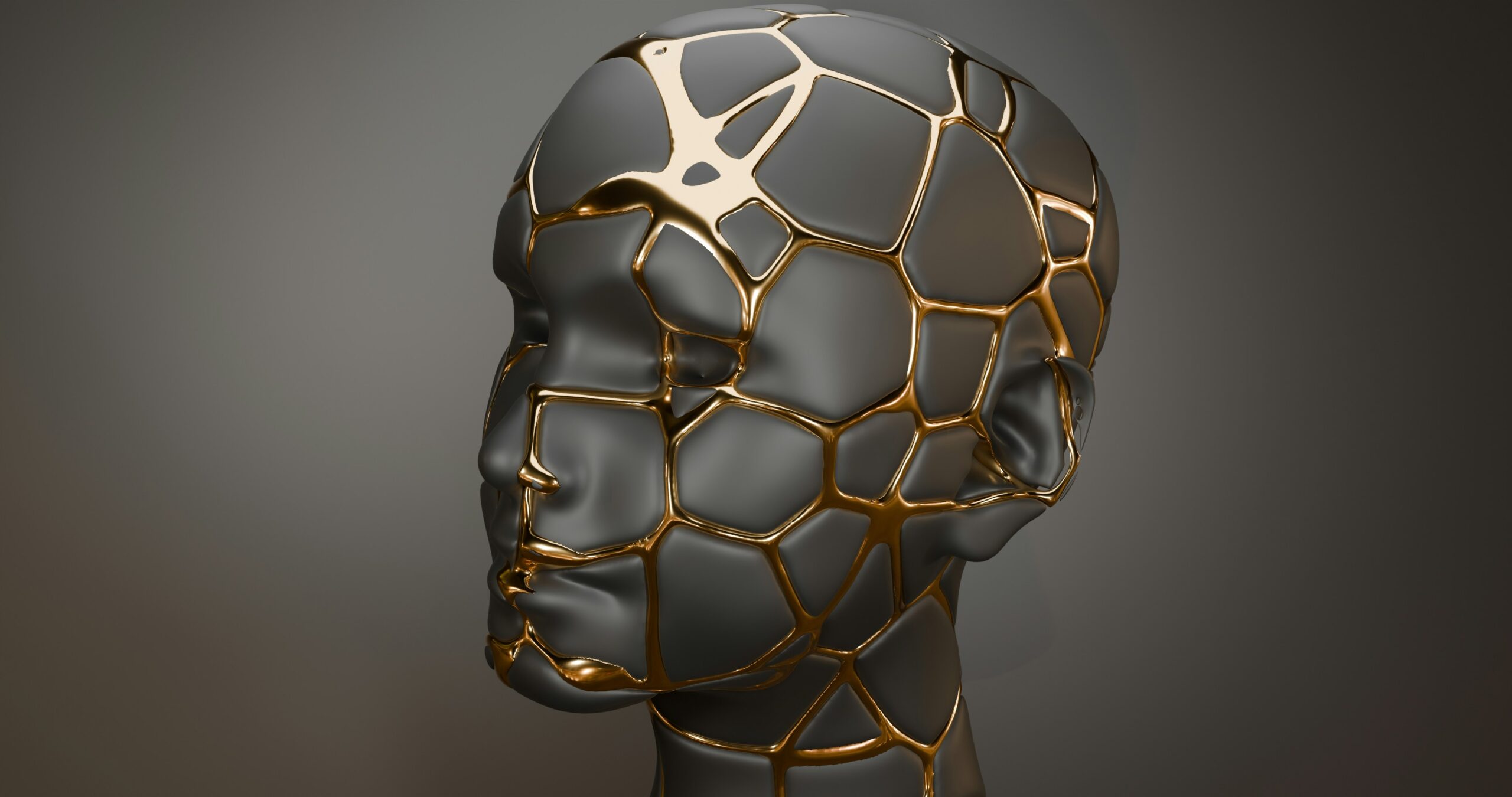
Mapping the debate over how subjective experience fits into the physical world
You are a body made of matter.
But you also have an inner subjective experience.
You feel pain, form beliefs, make decisions, remember the past, and experience the world from the inside. Philosophy of mind begins with the puzzle created by that fact: how can a physical universe contain consciousness, meaning, intention, and subjective experience?
This will be a map of that debate. It will introduce the core concepts that structure philosophy of mind, then lays out the major theories of mind and matter—from physicalism and dualism to panpsychism, idealism, and neutral monism.
I. Conceptual Definitions
Causal Closure of the Physical
The causal closure of the physical is the idea that the physical world is causally complete on its own. In casual terms: whenever a physical event happens, and it has a cause, there is already a complete physical cause that explains it. If your arm moves, there is a physical story involving neurons, muscles, electrical signals, and bodily mechanics that is sufficient to explain the movement. Nothing outside the physical system needs to be added to make the physical event happen.
The importance of causal closure is that it creates a serious problem for non-physical minds. Suppose a mental state, like deciding to raise your hand, causes your arm to move. If the physical cause of the movement is already complete, then what causal work is the mental state doing? Either the mental state is identical to some physical process, or it becomes causally unnecessary. This is why causal closure puts pressure on dualism and non-reductive physicalism. It forces philosophers to explain how the mind can matter causally without violating the completeness of physical explanation.
Supervenience
Supervenience is a dependence relation between two sets of properties. The basic idea is: there cannot be a mental difference without some physical difference. If two beings are physically identical in every relevant respect, then they must also be mentally identical. Their beliefs, pains, sensations, and conscious experiences cannot differ unless something physical differs too.
Supervenience is central because it is the main tool of non-reductive physicalism. It allows philosophers to say that mental states depend entirely on physical states without saying that mental properties are simply identical to physical properties. In other words, the mental is fixed by the physical, but not necessarily reducible to it. The problem is that this position is delicate. If the mental is completely fixed by the physical, critics ask why we should not just reduce the mental to the physical. But if the mental is genuinely distinct, critics ask how it can have causal power without competing with its physical base.
The Explanatory Gap
The explanatory gap is the gap between knowing all the physical facts and understanding why those facts give rise to conscious experience. In casual terms: you could know everything about the brain, neurons, synapses, information processing, and behavior, and still wonder why any of that feels like something from the inside. The issue is not simply that science has failed to discover enough details. The issue is that physical descriptions seem to leave out subjective experience itself.
The significance of the explanatory gap is that it shows why consciousness is not just another scientific puzzle. With many biological functions, once we understand the mechanism, the mystery fades. Digestion, circulation, and respiration can be explained in functional and physical terms. But consciousness seems different. Even a perfect physical explanation of vision, pain, or emotion may still leave us asking why those processes are accompanied by lived experience. The explanatory gap is therefore an epistemic problem: a problem about what we can understand or deduce from physical information.
The Hard Problem of Consciousness
The hard problem, associated with David Chalmers, is the deeper ontological version of the explanatory gap. It asks why and how physical processes produce phenomenal consciousness at all. Phenomenal consciousness means subjective experience: what it is like to see red, feel pain, hear music, taste coffee, or be afraid. The hard problem is not about how the brain processes information or controls behavior. It is about why any of that processing is accompanied by experience.
The hard problem is so influential because it divides philosophy of mind more sharply than almost any other issue. Physicalists must explain how consciousness fits into a physical world. Dualists argue that consciousness shows physicalism is incomplete. Panpsychists argue that consciousness may be fundamental rather than produced. Eliminativists may deny that phenomenal consciousness exists in the way common sense assumes. The hard problem forces every theory of mind to say what consciousness is, not merely what consciousness does.
Intentionality
Intentionality is the “aboutness” of mental states. Beliefs, desires, hopes, fears, memories, and perceptions are usually about something. You believe that it will rain. You want a cup of coffee. You remember yesterday’s conversation. Your fear is directed toward a threat. Franz Brentano famously treated intentionality as the mark of the mental: mental states are directed toward objects, possibilities, or states of affairs in a way ordinary physical objects are not.
Intentionality is important because it raises a different problem from consciousness. Consciousness concerns what experience feels like. Intentionality concerns how mental states represent the world. A thermostat may respond to temperature, but does it represent the room as cold? A computer may store information, but does it mean anything by that information? Intentionality connects philosophy of mind to language, meaning, representation, artificial intelligence, and rational agency.
Multiple Realizability
Multiple realizability is the idea that the same kind of mental state can be realized by different kinds of physical systems. Pain, for example, might be realized in human neural tissue, animal nervous systems, alien biology, or possibly artificial systems. The mental type “pain” does not seem tied to one exact physical type.
Multiple realizability became philosophically powerful because it is the classic argument against reductive type-identity theory. If pain were strictly identical to one specific brain state, then creatures without that brain state could not feel pain. But that seems too narrow. Different species appear capable of similar mental states despite having different nervous systems. This pushes philosophers toward functionalism, non-reductive physicalism, or other views that define mental states by their roles rather than by their exact physical makeup.
Type-Token Identity
Type identity says that mental kinds are identical to physical kinds. For example, the type “pain” might be identical to a specific type of neural firing. Token identity is weaker. It says that each particular mental event is identical to some particular physical event, without claiming that all events of that mental kind share the same physical type. My pain right now is identical to some physical event in my brain, but pain as a general mental category may not be identical to one universal physical type.
This distinction matters because it allows philosophers to be physicalists without being strict reductionists. Type identity is simple and strong, but it struggles with multiple realizability. Token identity is more flexible. It allows each mental event to be physical while leaving room for mental kinds to vary across organisms and systems. This is important for positions like anomalous monism, which holds that mental events are physical events but that mental descriptions do not reduce neatly to physical laws.
Causal Overdetermination
Causal overdetermination occurs when one event has more than one sufficient cause. In philosophy of mind, the problem arises like this: suppose a behavior is caused by a mental state, such as a desire, and also caused by a physical brain state. If the physical brain state is already sufficient to cause the behavior, then the mental state looks unnecessary. The behavior would have happened anyway.
The problem of causal overdetermination is especially important because it is one of the biggest traps for non-reductive physicalism. Non-reductive physicalists want to say that mental states are real, distinct from physical states, and causally important. But if every physical action already has a sufficient physical cause, then mental causation seems either redundant or illusory. This is the problem of mental causation. It forces non-reductive physicalists to explain how mental properties can make a real causal difference without violating causal closure.
II. Taxonomy of Mind–Matter Ontologies
Reductive Physicalism
Reductive physicalism says that mental states are nothing over and above physical states. On this view, mental kinds can ultimately be identified with physical kinds. Consciousness, belief, memory, and pain are all real, but they are real as physical processes.
The appeal of reductive physicalism is that it gives a clean answer to the mind–body problem. It avoids mysterious non-physical substances and fits comfortably with scientific explanation. The cost is that it can seem too simple. It struggles to explain subjective experience, intentionality, and multiple realizability. If every mental state is just a physical state, we still need to know why the physical state has the mental character it does.
Non-Reductive Physicalism
Non-reductive physicalism says that mental states depend entirely on physical states but are not reducible to them. Mental properties supervene on physical properties: no mental difference without a physical difference. But mental descriptions remain distinct and cannot be eliminated in favor of neuroscience or physics.
Non-reductive physicalism is attractive because it occupies one of the most important middle positions in the debate. It respects science while preserving the reality of mental life. It says the mind is not a ghostly substance, but it also says psychology, agency, and consciousness are not mere illusions. The challenge is stability. If mental properties are fully fixed by physical properties, critics ask why they are not reducible. If they are genuinely distinct, critics ask how they can cause anything.
Eliminative Materialism
Eliminative materialism says that many ordinary mental categories do not refer to real things. Beliefs, desires, intentions, and perhaps even experiences may be part of “folk psychology,” an outdated common-sense theory that future neuroscience may replace. Just as science rejected phlogiston and witches, eliminativists argue that science may reject parts of our ordinary mental vocabulary.
The force of eliminative materialism is that it takes scientific revision seriously. It does not merely reduce the mind to the brain. It argues that some of what we call “the mind” may not exist as we think it does. This view is powerful because science has often replaced common-sense categories with better theoretical frameworks. But it is also deeply counterintuitive. It seems hard to deny that people have pains, hopes, fears, and beliefs without using those very concepts in the denial.
Substance Dualism
Substance dualism says that mind and body are two fundamentally different kinds of things. The body is physical; the mind is non-physical. In the Cartesian version, the mind is an immaterial thinking substance that can exist independently of the body.
Substance dualism remains significant because it captures the intuition that conscious experience is radically different from physical matter. Thoughts do not seem extended in space the way tables and brains are. Pain does not seem identical to neural tissue. But substance dualism faces a serious causal problem. If the mind is non-physical, how does it interact with the physical body? How can an immaterial decision cause a material arm to move?
Property Dualism
Property dualism says there is only one kind of substance, usually physical substance, but it has two kinds of properties: physical properties and mental properties. The brain is physical, but conscious experience is an irreducible property of certain physical systems.
Property dualism is useful because it avoids the most extreme version of Cartesian substance dualism. It does not posit a separate soul-substance floating outside nature. But it still insists that consciousness is not reducible to physical structure or function. The difficulty is again mental causation. If mental properties are irreducible, do they have causal power? Or are they merely byproducts of physical processes?
Epiphenomenalism
Epiphenomenalism says that physical states cause mental states, but mental states do not cause physical states. Conscious experience exists, but it does not do anything. The brain produces consciousness the way a steam engine produces steam: the steam may be real, but it does not drive the engine.
Epiphenomenalism is philosophically tempting because it preserves the reality of consciousness while respecting causal closure. It avoids saying that non-physical mental states interfere with the physical world. But the cost is enormous. If consciousness has no causal power, then your pain does not cause you to say “ouch,” your desire does not cause you to act, and your reasoning does not cause your conclusions. That makes ordinary agency difficult to understand.
Panpsychism
Panpsychism says that consciousness, or at least proto-consciousness, is a fundamental and pervasive feature of reality. Rather than thinking consciousness suddenly appears when matter becomes complex enough, panpsychism suggests that mind-like properties are already built into the basic structure of the world.
Panpsychism matters because it offers a direct response to the hard problem. If consciousness is fundamental, then we do not need to explain how consciousness emerges from wholly non-conscious matter. The problem shifts instead: how do simple forms of consciousness combine into complex conscious minds like ours? This is known as the combination problem, and it is the central challenge for panpsychism.
Idealism
Idealism says that reality is fundamentally mental. The physical world is not the foundation of mind; rather, what we call the physical world is somehow dependent on mind, experience, or consciousness.
The philosophical strength of idealism is that it reverses the usual physicalist picture. Instead of asking how mind emerges from matter, it asks how the appearance of matter arises within mind. This can make consciousness easier to place at the center of reality. But idealism faces the challenge of explaining the stability, objectivity, and apparent independence of the physical world. If reality is mental, why does the world behave as if it exists independently of any individual mind?
Neutral Monism
Neutral monism says that reality is made of one basic kind of stuff, but that this stuff is neither mental nor physical in itself. The mental and the physical are two ways this deeper neutral reality appears, is organized, or is described.
Neutral monism is valuable because it tries to avoid choosing between materialism and dualism. It says the debate may begin with a false contrast. Maybe mind and matter are not two separate substances, and maybe one does not reduce to the other. Instead, both may arise from something more basic. The challenge is making this “neutral” basis clear enough to do explanatory work rather than simply naming a mystery.
III. The State of the Debate
The inquiry into the philosophy of mind involves reconciling three competing, seemingly irreducible intuitions: that the mind is a causal agent, that the mind is a phenomenon of the physical world, and that the mind has a subjective quality that science currently cannot fully map.
The first intuition is that the mind does real causal work. Our beliefs, desires, intentions, pains, memories, and decisions appear to shape what we do. When someone reaches for water because they are thirsty, avoids a flame because it hurts, or changes their mind after hearing an argument, mental life seems causally active. Any theory that denies mental causation risks making agency, reasoning, and responsibility difficult to understand.
The second intuition is that the mind belongs to the physical world. Mental states are deeply tied to brains, bodies, nervous systems, and physical processes. Damage the brain, alter the chemistry, stimulate the neurons, or change the body’s perceptual systems, and mental life changes. This makes it difficult to treat the mind as an entirely separate substance or independent realm. Any serious theory of mind must explain why mental life is so tightly connected to the physical organization of living systems.
The third intuition is that the mind has a subjective character that physical description does not yet capture. Conscious experience is not merely information processing, behavioral control, or neural activity described from the outside. It is also what pain feels like, what color looks like, what music sounds like, and what it is like to be a subject of experience at all. This is why consciousness remains philosophically difficult even when neuroscience becomes more advanced. A complete physical map of the brain still seems different from an explanation of why there is something it is like to undergo those processes.
The state of the debate is defined by the difficulty of holding these three ideas together. Physicalist theories are strongest at explaining the mind’s dependence on the body, but they struggle to explain subjective experience without reducing it to function or mechanism. Dualist theories preserve the apparent uniqueness of consciousness, but they struggle to explain how the mind fits into the causal order of nature. Panpsychist and neutral monist theories try to rethink the basic structure of reality, but they face the challenge of explaining how ordinary minds arise from more fundamental ingredients.
For this reason, philosophy of mind remains unresolved not because the field lacks theories, but because each theory preserves one intuition at the cost of pressuring another. The mind seems physical, but not merely physical. It seems causally powerful, but physical causation already appears complete. It seems scientifically investigable, but its subjective character resists third-person description. The central problem is not simply to choose between mind and matter, but to explain how causation, physical dependence, and subjective experience can belong to a single reality.
References
Chalmers, D. J. (1996). The Conscious Mind: In Search of a Fundamental Theory. Oxford University Press.
Churchland, P. M. (1981). Eliminative materialism and the propositional attitudes. The Journal of Philosophy, 78(2), 67–90.
Dennett, D. C. (1991). Consciousness Explained. Little, Brown and Co.
Goff, P. (2017). Consciousness and Fundamental Reality. Oxford University Press.
Jackson, F. (1982). Epiphenomenal qualia. The Philosophical Quarterly, 32(127), 127–136.
Kim, J. (2005). Physicalism, or Something Near Enough. Princeton University Press.
Levine, J. (1983). Materialism and qualia: The explanatory gap. Pacific Philosophical Quarterly, 64(4), 354–361.
Nagel, T. (1974). What is it like to be a bat? The Philosophical Review, 83(4), 435–450.
Papineau, D. (2002). Thinking about Consciousness. Oxford University Press.
Stoljar, D. (2023). Physicalism. In E. N. Zalta & U. Nodelman (Eds.), The Stanford Encyclopedia of Philosophy (Fall 2023 ed.).
Leave a Reply